With a new discussion guide titled "Let's Talk About ... Racism," the venerable Christian relief organization has succumbed to the inflammatory tenets of critical race theory and 'antiracism.'"
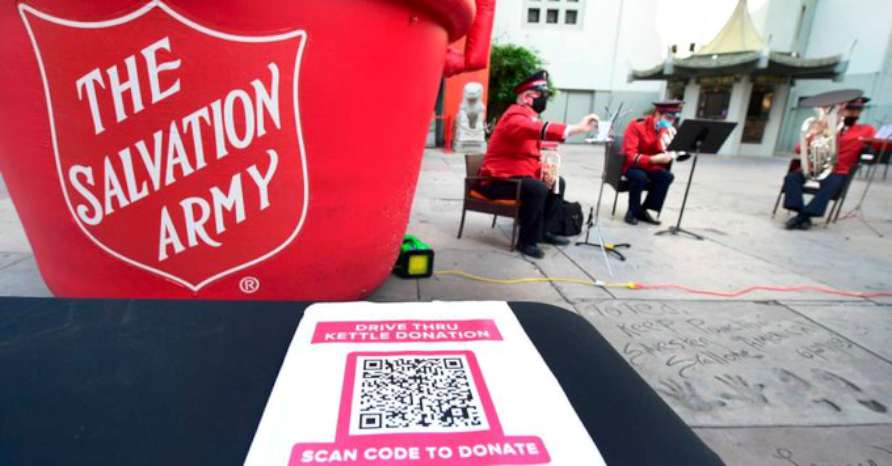
As Americans head out on Black Friday to make a dent in their holiday shopping lists, some are sure to come across Salvation Army volunteers ringing bells as part of the annual Red Kettle campaign. But this year, the global charitable organization wants more from its donors than a donation to the needy during the holidays. With the dissemination of a recent Salvation Army guide titled "Let's Talk About ... Racism," the Christian organization is attempting to elicit "sincere" apologies from white people for being racist.
The guide, which was compiled and approved earlier this year by the International Social Justice Commission of the Salvation Army, aligns the organization with the ideology of the Black Lives Matter, antiracism, and critical race theory movements.
Defining "structural racism" as "the overarching system of racial biasing across institutions and society," the guide declares: "These systems give privileges to White people resulting in disadvantages to People Of Color."
What was once an organization with a straightforward charitable goal, for which it has received millions in U.S. government funding, appears to have become a proponent of controversial ideas including those found in the books of Ibram Kendi (whose given name is Henry Rogers) and Robin DiAngelo, both of whom are listed in the guide under the Resources, Tools and Contributors section. Also featured in that section of the guide is the New York Times' 1619 podcast, which has become the basis of some high school and collegiate instruction on critical race theory.
Between 2014-2021, the Salvation Army received in the ballpark of $10 million from CSOSA, a federal agency that supervises adults on probation, parole, and supervised release in the District of Columbia. The federal agency's mission is to "support the fair administration of justice in close collaboration with...
What was once an organization with a straightforward charitable goal, for which it has received millions in U.S. government funding, appears to have become a proponent of controversial ideas including those found in the books of Ibram Kendi (whose given name is Henry Rogers) and Robin DiAngelo, both of whom are listed in the guide under the Resources, Tools and Contributors section. Also featured in that section of the guide is the New York Times' 1619 podcast, which has become the basis of some high school and collegiate instruction on critical race theory.
Between 2014-2021, the Salvation Army received in the ballpark of $10 million from CSOSA, a federal agency that supervises adults on probation, parole, and supervised release in the District of Columbia. The federal agency's mission is to "support the fair administration of justice in close collaboration with...