 |
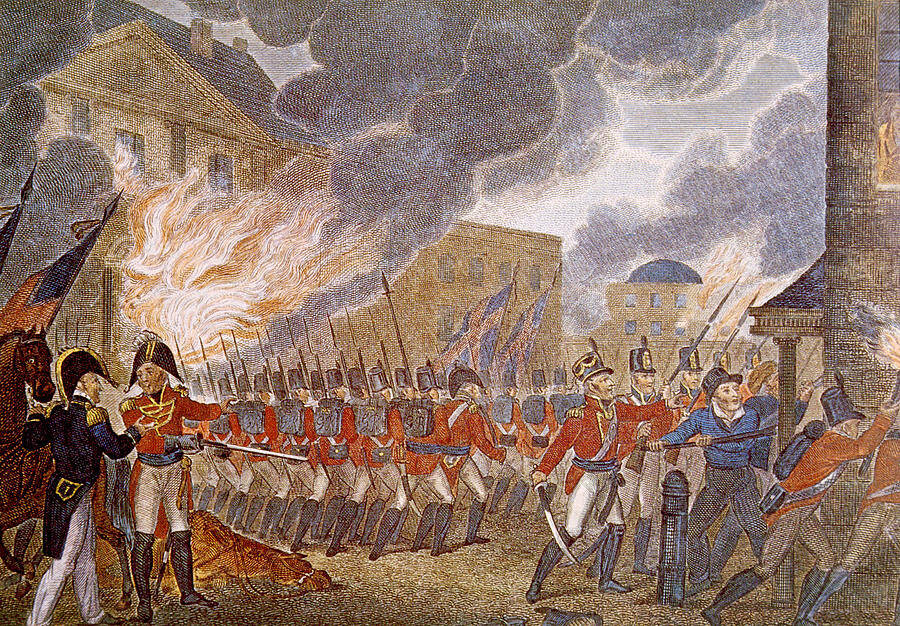
| A depiction of the burning of Washington, D.C. during the War of 1812. |
President James Madison signs a declaration of war against Great Britain, marking the start of the War of 1812. The conflict, which exploded due to tensions over trade and westward expansion, endured for about two and a half years. It ended with the Treaty of Ghent in 1815, which largely restored pre-war borders and relations while initiating a nearly uninterrupted status quo of peace and cooperation between the United States and Great Britain that has persisted ever since.


Overview of the War of 1812
The War of 1812 was a military conflict between the United States and Great Britain that lasted from June 18, 1812, to February 17, 1815. This war is often referred to as America's "Second War of Independence" due to its roots in unresolved issues from the American Revolutionary War.

Causes of the War
The primary causes of the War of 1812 included:
- Trade Restrictions: Britain imposed trade restrictions on the U.S. during its conflict with France, severely limiting American trade.
- Impressment: The British Royal Navy forcibly recruited American sailors into its service, which angered the U.S. government and public.
- Territorial Ambitions: The U.S. sought to expand its territory, particularly into Canada, which was then a British colony.

- The war featured several key events and battles:
- Invasions of Canada: The U.S. attempted multiple invasions of Canada, but these campaigns largely ended in failure, with significant defeats at Detroit and Queenston Heights.
- Naval Engagements: The U.S. Navy achieved notable victories against British ships, including the famous USS Constitution, which earned the nickname "Old Ironsides."
- Battle of New Orleans: The most famous battle occurred after the peace treaty was signed, where General Andrew Jackson led American forces to a decisive victory against the British.
- Conclusion and Aftermath
- The war concluded with the Treaty of Ghent, signed on December 24, 1814, which restored territorial boundaries to their pre-war status. The conflict ended inconclusively, with neither side gaining significant advantages. However, it fostered a sense of national identity and unity in the United States.
More This Day In History:
This Day In History - April 29, 1429: Joan Of Arc Arrives In OrleansMay 26, 1896: Nicholas II Is Crowned Czar Of RussiaMay 10, 1869: The Transcontinental Railroad Is Completed
May 4, 1905: Construction Begins On The Panama Canal
May 5, 1818: Karl Marx Is Born
May 4, 1905: Construction Begins On The Panama Canal
April 30, 1803: The Louisiana Purchase Is Completed
April 29, 1429: Joan Of Arc Arrives In Orleans
April 25, 1792: The Guillotine Is Used For The First Time
April 24 1915: The Armenian Genocide Begins
June 4, 1989: Do You Remember The Tiananmen Square Massacre?
May 14th, 1804: Lewis And Clark Begin Their Expedition Of The American West
May 18, 1925: Communist Genocidal Dictator Pol Pot Is Born
May 21, 1927: Charles Lindbergh Completes His Transatlantic Flight
This Day In History: May 23, 1934: Bonnie And Clyde Are Killed
May 29, 1453: Muslim Invaders Capture The Byzantine Christian City of Constantinople
This Day In History - May 30, 1431: Joan Of Arc Is Burned At The Stake
June 4, 1989: Do You Remember The Tiananmen Square Massacre?
June 8, 1967 - The USS Liberty was attacked by Israeli Air Force jet fighters and Navy torpedo boats in international waters
June 10, 1752: Benjamin Franklin Flies His Famous Kite
June 4, 1989: Do You Remember The Tiananmen Square Massacre?
June 8, 1967 - The USS Liberty was attacked by Israeli Air Force jet fighters and Navy torpedo boats in international waters
June 10, 1752: Benjamin Franklin Flies His Famous Kite

No comments:
Post a Comment